Most of what we mend in Trenton starts small: a cracked pipe boot, a lifted shingle, sealant that gave out on a chimney flashing. Water wicks sideways under the field course, so the stain on your ceiling is rarely the hole.
Roof repair restores the waterproofing layer — shingles, underlayment, flashing, and the sealant around every penetration — without tearing off a roof that still has life in it. One thing changes the plan: a saturated roof deck.
- Step flashing gets rebuilt where a roof meets a sidewall, which is where most water gets into Trenton rowhomes.
- Chimney flashing and counterflashing get reset and then sealed with roof cement or a polyurethane mastic that stays flexible through freeze-thaw.
- Pipe boots and vent boots — the rubber collars around plumbing and exhaust stacks — get replaced once that rubber cracks.
- Valleys are cleared and relined, because two roof planes meeting there push the highest volume of water.
- Drip edge and rake edges get re-fixed so runoff stops curling back under the eave.
- Ridge caps and ridge vents get checked; a failed ridge cap lets wind-driven rain straight into the attic.
Roof Repair Starts With an Inspection, Not a Sales Pitch
A roof inspection takes about an hour on an average house, and it is the only honest way to price a fix. We start inside, because a ceiling stain tells you which slope the water is traveling across.
- Attic first: we look for dark sheathing, wet trusses, and daylight along the ridge beam, since a soft rafter changes what we can fasten to.
- Roofline walk from the ground: granule loss, curled or bruised shingles, and debris piled in a valley all show up without a ladder.
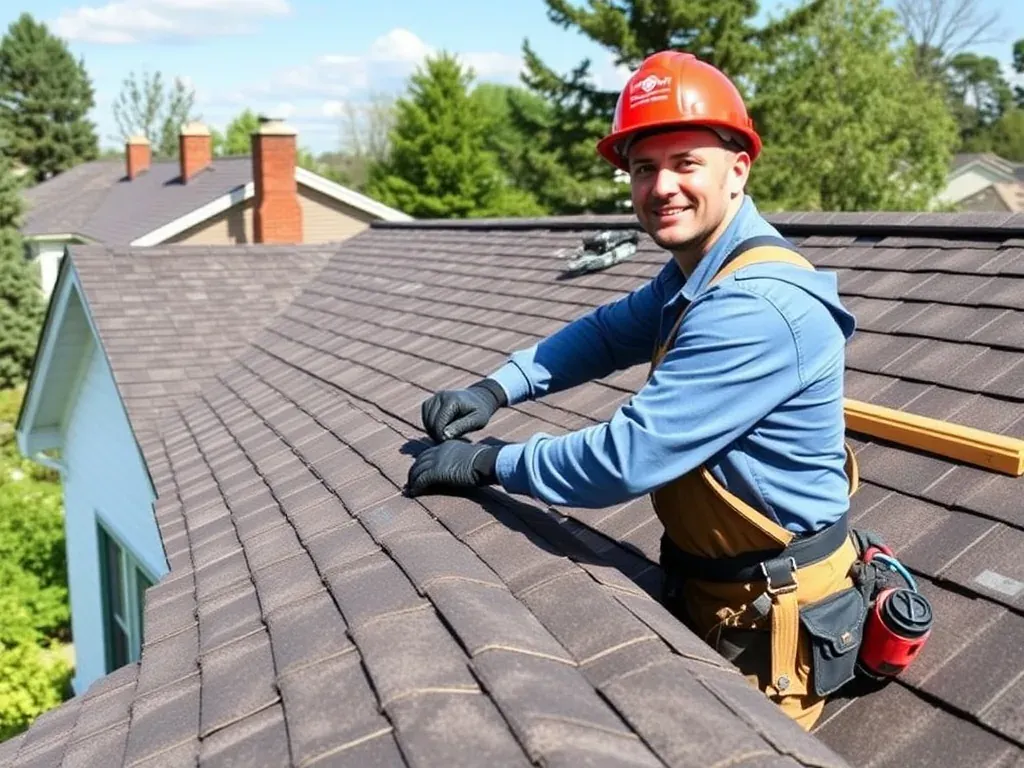
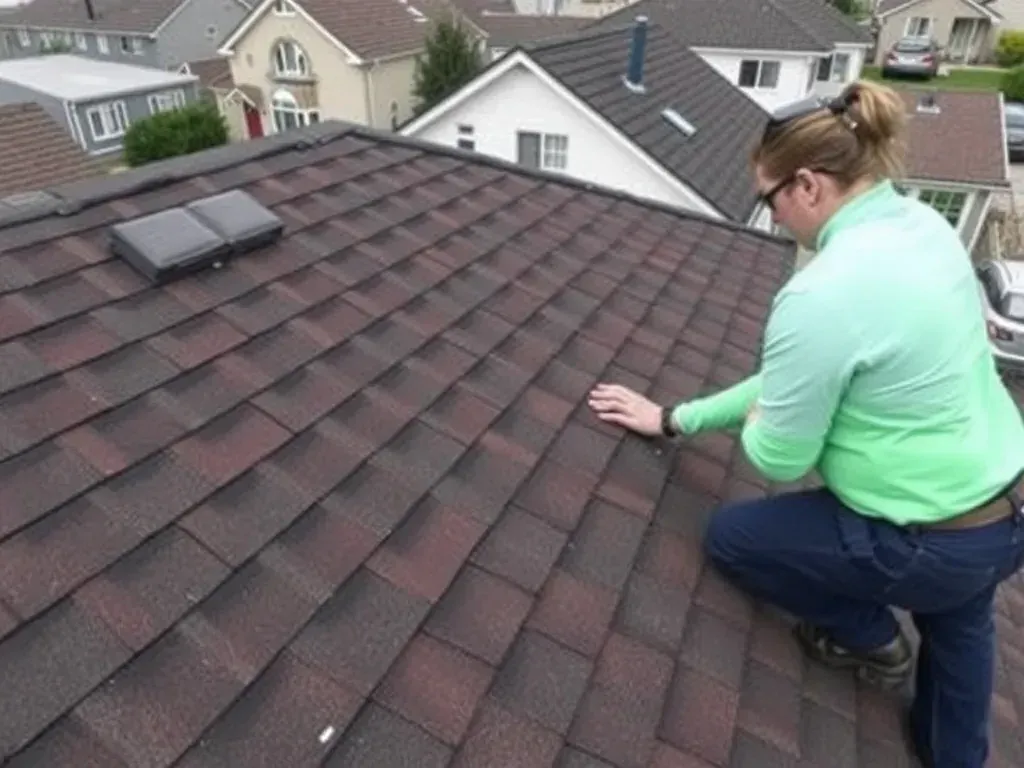
- Rooftop access with a ladder, a safety harness, and scaffold where the pitch is steep, so we are not inspecting only what the gutter lets us see.
- We probe the substrate with a pry bar where a course lifts, because soft plywood or OSB decking under a patch means the patch will not last.
- We check the vapor barrier and insulation in the attic, since warm air escaping is what feeds an ice dam at the eave.
- You get a written roof estimate listing materials, labor, and the building code details we have to meet — free, with no pressure to sign.
Roof Repair Materials: What We Install and What Lasts Here
Not every roof takes the same product, and the wrong match is what makes a patch stand out from the curb. We stock the common profiles and order the rest the same week so the repair blends instead of announcing itself.
- Asphalt shingles — three-tab or architectural shingle — remain the standard on these rooftops; architectural shingles carry a heavier mat and resist wind uplift better.
- Metal roofing, whether a standing-seam panel or a corrugated panel, sheds snow and lasts decades over a porch or a mansard canopy.
- Slate, clay tile, and concrete tile show up on the older houses here; matching a tile profile is a sourcing job, not a shelf item.
- Wood shake and cedar shake usually need hand-sealing and a fresh starter course rather than full replacement.
- Low-slope sections take a membrane: TPO or EPDM, a PVC membrane, a modified bitumen sheet, or a built-up roof with tar and bitumen.
- Underlayment is either a synthetic underlayment or an ice-and-water shield run along the eave, through valleys, and around a dormer.
- Felt and tar paper still work in dry spots, but they tear during a tear-off, so we upgrade when the deck is open.
- Hip, gable, and gambrel roofs each change how we stagger courses and where the waterproofing has to lap.
Roof Repair Warning Signs You Can Check Yourself
Shingle damage is progressive. What begins as granule loss and a slight curl becomes a systemic leak by the time you notice a ceiling stain.
- Granule loss in the gutter and end-of-life wear across the field course mean the asphalt and the mat are both finished.
- Rot and decay in the fascia, soffit, or decking, which you can often feel as a soft spot or see as paint that flakes and peels.
- Sag along the roofline, which usually points to a failed rafter, joist, or ridge beam rather than to the shingles.
- Ice dams forming at the eave, where meltwater refreezes and pushes water up under the courses.
- Blistering, alligatoring, chalking, or delamination across a modified bitumen or membrane surface.
- Ponding water on a flat roof, where the pitch has settled and the drain or scupper cannot keep up.
- Rust, corrosion, and backed-out fasteners at the exposed screws on a metal panel.
Roof Repair Cost: What Changes the Number
Cost on a typical home runs from a few hundred dollars for a flashing or sealant fix to a few thousand when decking, valley work, or a partial tear-off is involved. Here is what moves it.
- Access: a steep pitch, a three-story rowhome, or a rooftop that needs scaffold adds labor hours.
- Material: a bundle of asphalt shingles is cheap; a matched slate or clay tile order is not.
- Deck condition: replacing a soft plywood or OSB panel adds material and roughly a day.
- New ice-and-water shield and underlayment, whenever the work is more than a surface patch.
- Permits and building code requirements, once the scope crosses from repair into replacement.
We write the roof estimate line by line so you can see where the money goes and decide what to skip. Insurance claim assistance is available when storm or hail damage is the cause.
A repair crew carries a real kit, and it shows in how long a job takes. A roofing square, a nail gun, and an air compressor handle the field work, while a pry bar and a roofing shovel lift courses without cracking them. We bring a torch for modified bitumen detail work where the manufacturer allows open flame, battens and counterbattens under a metal panel, and a purlin where the decking cannot carry the load. A dumpster sits on site for torn-off material, because leaving debris in the yard is how nails end up in a driveway. Our draw is coating a flat roof before replacing it, and using roofing adhesive instead of a mechanical fastener wherever wind uplift is the real problem.
Roof Repair or Replacement: Knowing When to Stop Patching
A recover — laying new shingles over the old ones — saves the disposal cost but traps whatever rot already sits in the decking. On a roof near end-of-life wear, an overlay just delays the tear-off and pays for it twice.
If another roofing contractor tells you the whole roof is gone after a five-minute look from the driveway, get a second opinion. A licensed and insured roofer should climb up and probe the decking before quoting anything.
- Shingles are past end-of-life wear across more than a third of the roof.
- Decking rot runs across several bays instead of one isolated spot.
- Leaks have returned in the same valley or chimney flashing twice.
- The roof already carries a second layer, and building code limits a third.
Roof Repair Around the Edges: Gutters, Ventilation, and Trim
Water that leaves the roof has to go somewhere. Gutter and downspout problems cause more fascia rot than the shingles ever do, and a roof that cannot breathe cooks itself from underneath.
- Gutter installation and repair, sized so a nor'easter's rain volume does not sheet over the front edge.
- Soffit and fascia repair, since both take the brunt when the roof edge fails.
- Ridge vent, soffit vent, and attic fan working together to pull hot humid summer air out of the attic.
- Snow guards on a metal panel, so snow does not slide off in one sheet and take the gutter with it.
- Small details that decide whether water gets in: an apron flashing at a wall, a boot flashing at a vent, the verge and overhang at a gable end, and a weatherproofing membrane under an awning or canopy bracket.
Roof Repair, Storm Damage, and Insurance Claims
Storm damage repair and hail damage repair usually run through insurance, and the paperwork matters as much as the work. Hail bruising and wind uplift are easy to miss once material has been moved.
- We record the storm date, photograph the damage, and document hail bruising or wind uplift on a shingle before anything gets touched.
- The insurance scope and line-item estimate go to the adjuster inspection, and we meet the adjuster on the roof whenever we can.
- If the first scope misses decking or a code-required ice-and-water shield, we file a supplemental claim.
- We track the claim deadline and help with the proof of loss form so nothing lapses on your side.
- Building code details — correct nail placement, ring-shank nails through the field course, and no overdriven fasteners — get inspected and documented for the file.
Roof Repair Questions We Get Asked Most
How long does a roof repair take?
Most repairs take one day. Shingle work over a small area is a few hours, while a valley rebuild or partial tear-off with new decking and underlayment can run two days, weather permitting.
Can you repair a roof in winter?
Yes, with care. Adhesive and self-adhered underlayment need warmer temperatures to seal properly, so in the cold we hand-seal or use a torch where the manufacturer allows it, and we watch the eave for ice dams.
Will a patch match the rest of my roof?
Close, not identical. New asphalt shingles fade in over a season, and the goal is a repair that stays watertight and blends at a glance rather than a color match nobody can promise on an aged roof.
Do you offer free estimates?
Yes. Call 877-909-0534 and we will schedule a roof inspection, then send a written roof estimate with materials and labor broken out.